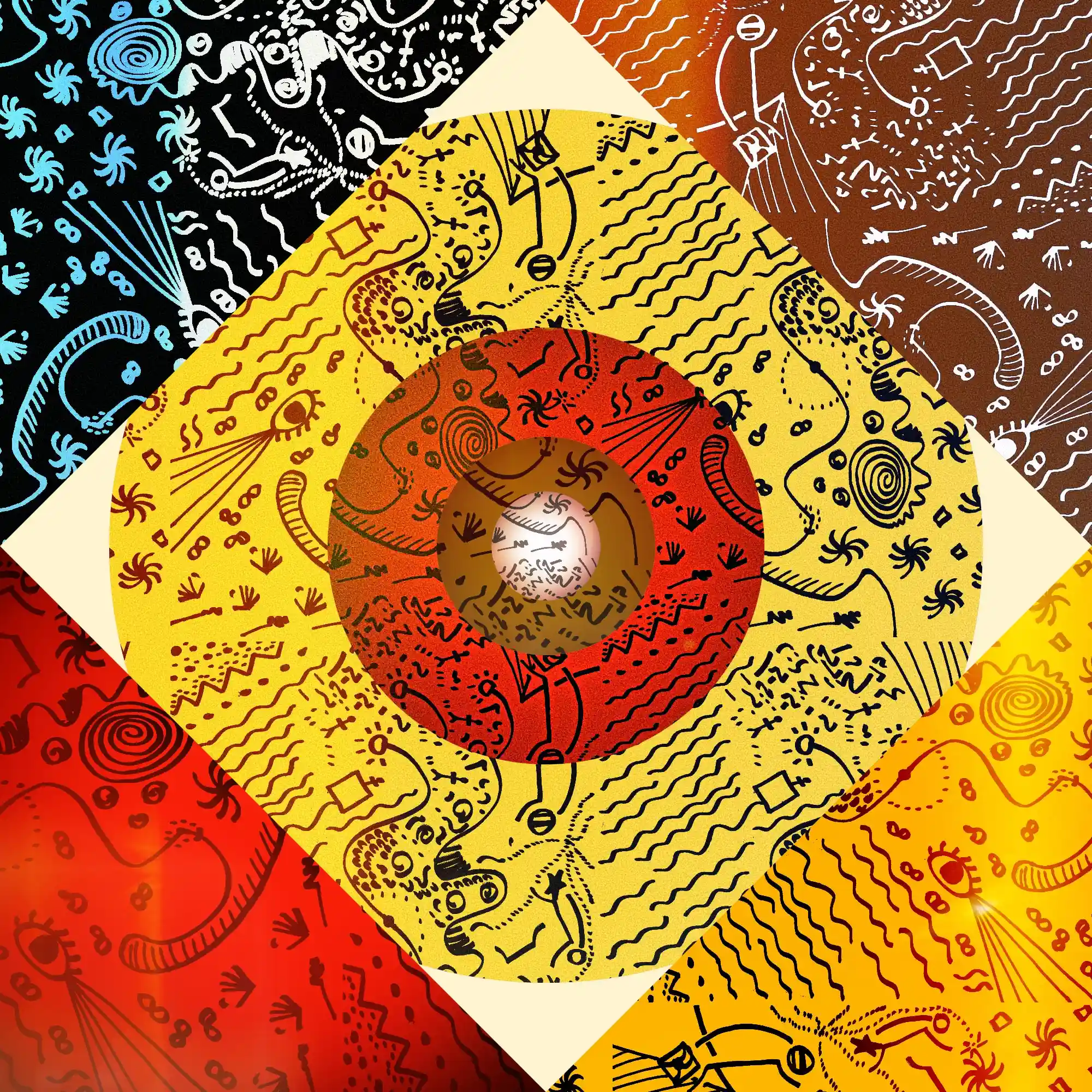
The basement wasn’t a room, but a lung. It breathed the city’s exhale—damp concrete, the ghost of furnace oil, the sharp, clean sorrow of old wood. The news from a phone was a flickering, silent fish in a far corner, casting anxious light.
The offering was not food, but objects laid on the scarred table: a biometric keycard from Aisha’s fintech job, its green LED eye dim. A desiccated bundle of romero Mateo’s mother had tucked in his suitcase, crumbling to dust. A single, perfect parrot feather Layla found on her fire escape. A spent .40 caliber shell casing Marcus kept polished in his pocket.
Kofi, first generation, did not bring an object. He brought a silence that settled differently.
“The systems are frictionless now,” Aisha said, her voice quiet. “They don’t need to hate you. The algorithm simply… overlooks. My code is beautiful. It optimizes. It also erases.” She tapped the keycard. “This is the new plastic reed. It plays a song of access. It has forgotten the hand.”
Mateo rolled the romero between his fingers. “My mother says this plant remembers the path of the conquistadors, the old roads it healed beside. It remembers the soil is a body. Now, they sell it in plastic tubes. ‘Airborne herbal defense.’ They turn memory into a product for the fear they sell you first.”
Outside, a mycorrhizal whisper travelled through the root systems under the pavement, a chemical lament for a lost symbiotic partner. The group felt it as a faint pressure behind the eyes, a shared tinnitus of loss. They were not just individuals talking; they were nodes in a buckling mycelial network, sensing a poison drip.
Marcus held the shell casing, cold and final. “They build their empire on a lie of separation. The individual. The nation-state. The species.” He looked at the feather, the romero, the dust. “But a bullet only makes sense if you believe the target is other. If you forget the target is just a temporary pattern of stardust and memory, wearing a different-shaped vessel.”
Kofi’s deep voice filled the space, not as sound, but as a change in pressure. “You are all thinking in their straight lines. Cause. Effect. Oppressor. Oppressed. Good. Evil.” He gestured to the air, thick with motes. “The dust listens. The concrete dreams of being chalk. That LED light,” he nodded to Aisha’s card, “dreams of the supernova that birthed its elements. It is all one consciousness, forgetting itself, remembering itself.”
He placed his palm flat on the concrete floor. “The most dangerous invention is not theft. It is the story of mine. This body is not mine. It is a loan from the bacteria, the minerals, the water. This breath is a transaction with the atmosphere, the trees. To claim sole ownership is the original violence. It makes machines of us all.”
Layla picked up the feather. “So their empire… it is a brain damage. A severing of the neural pathways that connect the self to the root, to the breath, to the star.”
“Yes,” whispered Mateo. “A linear sickness in a spiral universe.”
The news feed on the phone glitched, a bloom of fractal static, an AI hallucinating a mountain range that never was. They watched, not with fear, but a strange recognition.
“They will fill the world with false memories,” Aisha said. “But the body of the Earth has a deeper memory. In the strata. In the genetic code of the cockroach and the sequoia. We carry it, too. In the recipes we don’t write down, in the prayers that are just a specific way of breathing.”
Marcus put the shell casing down. It was just ore again. “So we walk the spiral. Not to fight the darkness, but to study it. To know it as our own forgotten self. To feel the empire’s fever-dream as a sickness in our shared body.”
Kofi hummed, a vibration that seemed to sync with the basement’s hidden water pipe. “The goddess is the whole spiral. We are not seeking love. We are learning to be expressions of a love so vast it includes the fracture, the fever, the forgetting. Our fragile bodies are the location of the remembering.”
AFRO JAZZ
9pm Saturdays at Sahara Lounge, ATX